

By Mercy Joseph, Abuja
Nigerian families raising children with autism may soon have renewed hope as the Federal Government moves to establish international-standard autism centres across the country’s six geopolitical zones to improve access to specialised care, early diagnosis, treatment and rehabilitation.
The proposed centres are expected to ease the burden on families grappling with delayed diagnosis, high treatment costs, limited access to specialised services and inadequate professional support for children living with autism.
The centres, which are being considered for funding under the 2027 Tertiary Education Trust Fund (TETFund) Special Intervention, are expected to be hosted by selected university medical schools across the country.
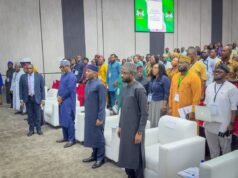
The Executive Secretary of TETFund, Arch. Sonny Echono, disclosed this in Abuja on Wednesday during the inauguration of the National Committee for the Establishment of International Standard Autism Centres in Nigeria.
Echono said the initiative was designed to strengthen autism care, improve access to specialised services and provide families with the support needed to manage the condition.
He said, “The proposed centres will provide early diagnosis, assessment, treatment, rehabilitation, research and professional training, while promoting public awareness and supporting families and caregivers.”
The initiative is expected to improve the prospects of early identification and intervention for children with autism while strengthening the capacity of healthcare professionals to provide appropriate care.
Echono said the committee had been mandated to develop a practical framework for establishing the centres, including identifying suitable universities and medical schools based on transparent and evidence-based criteria.
The committee is also expected to recommend minimum standards for the design, operation, staffing and quality assurance of the centres, drawing on recognised international best practices and applicable Nigerian standards.
Its responsibilities include developing cost estimates, implementation schedules, procurement requirements and measurable performance indicators, as well as proposing monitoring and evaluation mechanisms with clear milestones and reporting responsibilities.
The chairperson of the committee and Vice-Chancellor of the University of Medical Sciences, Ondo, Prof. Ebunoluwa Aderonke Adejuyigbe, said the initiative presented an opportunity to address the difficulties Nigerian families face in accessing autism care.
Adejuyigbe, a paediatrician, identified delayed diagnosis, limited access to specialised services, financial constraints and inadequate professional support as some of the major challenges confronting families raising children with autism.
She said many families had to navigate these difficulties while seeking appropriate care and support for their children.
“For many Nigerian families raising children with autism, the journey is often characterised by delayed diagnosis, partly due to denial, limited access to specialised services, financial difficulties and inadequate professional support,” she said.